Solitaire - Brain Training
- 4.8
- Rating
- 10.00K
- Installs
- Free
- Price
 Analysis by App-foxy
I usually return to solitaire when I want something quiet, familiar, and easy to stop after a few minutes. That is the space occupied by Solitaire - Brain Training, a free card game from KST GAMES built around the classic Klondike format. Its large cards and straightforward presentation make it immediately approachable, especially for players who do not want a busy interface or a complicated collection of modes.
My first impression is that this is a deliberately focused version of solitaire rather than a broad card-game package. You open it for a familiar deal, make a few decisions, and leave when the game has served its purpose. That simplicity is its main attraction, but it also creates the central question: after the first week, does it remain useful enough to keep installed?
Why the first week feels so comfortable
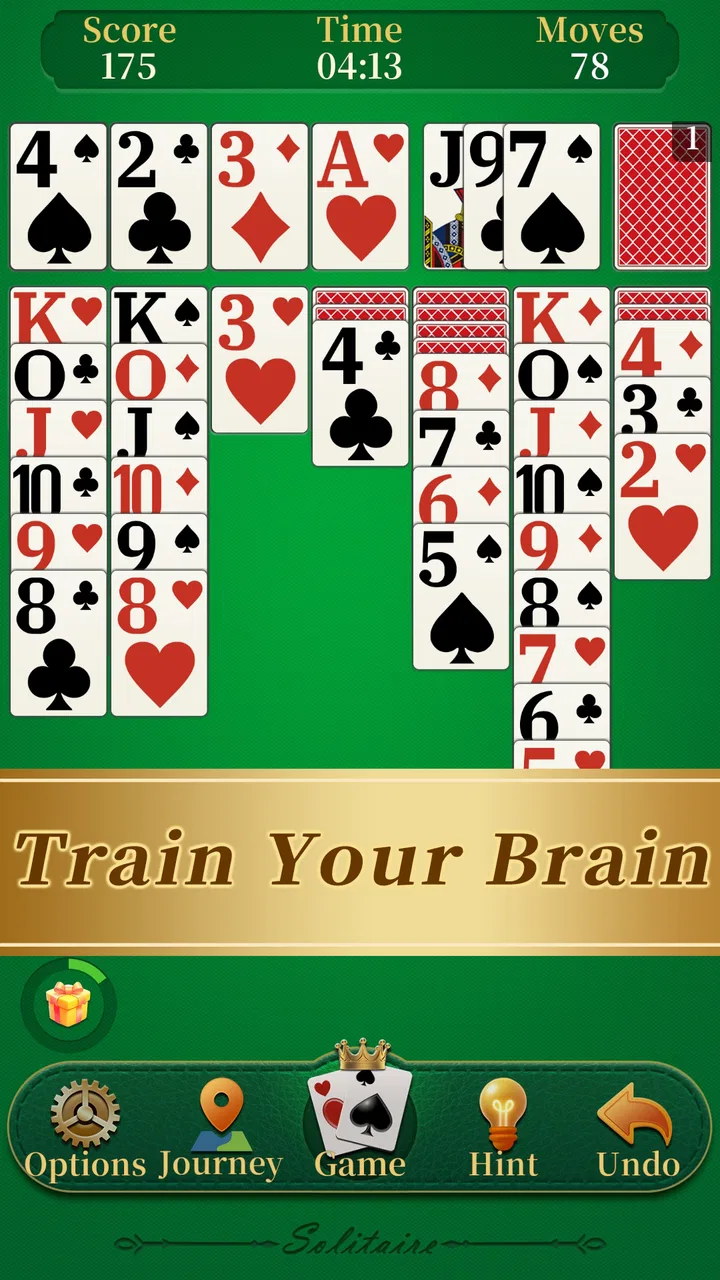
The opening experience is easy to understand because Klondike needs very little explanation. The aim is familiar, the cards are the focus, and the larger visual treatment reduces the effort needed to identify suits and values. I found that especially helpful when playing on a smaller phone, where dense card layouts can make a supposedly relaxing game feel unnecessarily demanding.
You May Also Like

 AccuWeather: Weather Radar
AccuWeather Review: A Quick, Clear Forecast for Everyday Decisions
For everyday plans, the best forecast is the one you can understand quickly. AccuWeather makes rain timing, radar, and local conditions easy to act on, with a few trade-offs.

 Hill Climb Racing
Why Hill Climb Racing Still Turns Crashes Into One More Run
A tiny car, a bumpy hill and one more upgrade: Hill Climb Racing keeps resurfacing because its simple chaos makes every near-miss feel personal.

 AliExpress - Shopping App
AliExpress Makes Global Shopping Feel Personal, but Shoppers Bear the Risk
AliExpress turns a global marketplace into a pocket-sized discovery engine. Its reach is useful, its shopping loop compelling, and its trade-offs easy to miss.

 Lords Mobile: Kingdom Wars
Lords Mobile Is a Kingdom-Building Routine, Not a Quick Match
A case-by-case verdict on the building, battles, device demands, and social commitments that make Lords Mobile rewarding for some players and exhausting for others.

 PDF Scanner app - TapScanner
TapScanner Makes Paperwork Easier to Capture, Check, and Share
TapScanner makes scanning with a phone feel less like a rescue operation and more like a dependable step in getting work done. Its capture tools are useful, though not flawless.

 Block Blast!
 Shows How Much a Puzzle Game Can Leave Out
A quiet grid game shows why puzzle players increasingly value instant clarity, repeatable skill and low-pressure play—and where the genre still needs to catch up.
More From Our News Desk
View All News


Large cards are not merely a cosmetic choice here. They make the game more accessible to older players, anyone with less-than-perfect eyesight, and people who prefer to play without constantly zooming in mentally on a crowded screen. The trade-off is that a spacious layout can show less information at once, so experienced players may need a little more visual scanning before planning a sequence.
The game suits short sessions particularly well. I can imagine playing one deal while waiting for an appointment, during a quiet coffee break, or at the end of the day when I want a low-pressure activity instead of another demanding game. There is no learning curve to overcome before that first useful session, which is a major advantage over card apps that surround solitaire with missions, currencies, unlocks, or several unfamiliar variants.
Its age rating of Everyone also matches the tone. Nothing about the core concept requires specialist knowledge, fast reactions, or a particular gaming background. A newcomer can understand the basic rhythm by watching the cards and following the available moves, while a regular solitaire player can begin making deliberate choices almost immediately.
One practical tip is to treat the first few deals as a way to learn the app’s visual rhythm rather than as tests of skill. Because the cards are prominent, I recommend scanning the tableau from left to right before moving anything. That small habit helps prevent impulsive moves and makes it easier to notice whether a hidden card can be exposed by rearranging a stack.
The initial appeal also comes from restraint. KST GAMES has not turned this into a noisy entertainment hub. If you want one familiar card activity that can be picked up without preparation, the focused design works in its favor. The first week is therefore the strongest part of the experience: the game is instantly recognizable, visually comfortable, and available without a purchase.
Who gets the most from the opening experience
I would recommend starting here if you are returning to solitaire after a long break, introducing the game to a relative, or looking for something calmer than action-oriented mobile games. The large-card approach lowers the barrier for people who find small symbols tiring, and the classic rules mean you do not have to memorize a new system.
It is also a sensible choice for players who dislike aggressive progression. Some alternatives try to make every session serve a larger reward track. That can be motivating, but it can also make a simple card game feel like a chore. This title is more appealing when the act of arranging cards is itself enough.
On the other hand, I would not choose it as my first option if I wanted a deep competitive environment, a large selection of variants, or a highly customizable solitaire experience. The same focus that makes the game friendly can feel narrow to someone who expects a full suite of card modes. If your idea of value is variety rather than comfort, a broader alternative may hold your attention longer.
What remains useful from month to month
Solitaire has a natural advantage for long-term use because its appeal is tied to routine rather than novelty. A player does not need to remember a complicated story or maintain a high level of concentration to return. I can play when I have only a few minutes, then come back later without feeling lost.
That makes this particular game suitable for building a modest daily habit. One useful approach is to give yourself a clear stopping point: play a single deal during a break, or use a short session as a transition between work and rest. The game works better as a small recurring ritual than as an app I would leave open for an entire evening.
The classic Klondike format also gives the experience a dependable mental pattern. You look for safe moves, decide when to uncover hidden cards, and avoid spending a useful card too early. Those choices are simple, but they reward patience. I find the game most satisfying when I slow down enough to plan two or three moves ahead instead of treating every available move as automatically correct.
A less obvious benefit is that the large-card presentation can make mistakes easier to diagnose. When a deal goes badly, I can more clearly review the sequence of decisions that caused the problem. Did I move a card before exposing a hidden one? Did I use a low card in a way that blocked a useful stack? This makes the game more suitable for reflective play than for mindless tapping.
For month-to-month value, however, the question is not whether Klondike remains playable. It certainly does. The question is whether this version gives me enough reason to choose it over the many other solitaire games available. Its answer is comfort and simplicity, not constant discovery. If that is what you want, the familiar format can remain useful. If you need fresh challenges every time you open the app, the experience may start to feel repetitive.
The public response suggests that the game has already found a receptive audience, with an average rating of 4.8 from around 357 ratings and roughly 72 written reviews. I would read that as a sign that the straightforward approach works for many players, while still remembering that a strong average does not automatically mean it matches every solitaire preference.
A realistic everyday routine
Imagine finishing lunch with a few minutes before returning to work. You do not want a game that demands sound, a long tutorial, or a commitment to a complete campaign. You open this one, play a Klondike deal, and stop when the break ends. The large cards make the board easy to read, and the familiar rules let you spend the available time making decisions rather than learning controls.
Another useful scenario is sharing the phone with someone who is less comfortable with small touch targets. The visual emphasis on cards makes it easier to explain what is happening without turning the session into a technical lesson. I would still suggest playing in a comfortable position and checking that the screen is clean, because card games depend heavily on distinguishing symbols at a glance.
For a longer habit, I would keep the app as a low-effort option rather than a primary hobby. It can fill small gaps in the day without demanding much attention, but I would not expect it to replace a richer card collection for someone who wants new rules or social competition.
How much upkeep the app asks from me
The maintenance burden is one of the strongest reasons to keep a focused solitaire game installed. It is free, the current version is 1.8.3, and it supports devices running Android 8.0 or later. That combination makes it practical for people using older compatible phones rather than upgrading solely for a casual card game.
Because the game is centered on a familiar format, there is little mental maintenance between sessions. I do not need to remember a complex progression system, manage a collection, or rebuild a strategy after time away. I can return after days or weeks and understand the board immediately. That is an underrated advantage for an app intended to become part of a quiet routine.
The main maintenance task is personal rather than technical: deciding whether the app still earns a place on the home screen. A simple game can disappear from daily use if it is buried among more stimulating apps. I would place it somewhere easy to reach if I wanted to use it as a deliberate break, but I would avoid treating it as a commitment. The value comes from availability, not obligation.
There is also a useful distinction between maintenance and customization. Some players enjoy adjusting themes, card backs, layouts, and rule settings because those options keep a familiar game feeling personal. A tightly focused solitaire app may be less satisfying for them than a more configurable competitor. For me, the cleaner approach is preferable when I want to begin playing immediately, but it leaves less room to reshape the experience around a very specific preference.
The free price lowers the risk of trying it. I can install it as a backup for moments when I want a quiet card game without planning around a purchase. That does not make it automatically better than paid alternatives, though. A paid app with richer customization or a more polished long-term system could be the better choice for a dedicated solitaire player. Free is most valuable here because the app’s modest scope makes experimentation easy.
Where the routine can become tiring
The biggest source of fatigue is repetition. Klondike is enduring because its rules are elegant, but those same rules can begin to feel predictable when there is no broader reason to continue. After the initial comfort fades, I may notice that I am repeating the same scanning process without feeling that the session is leading anywhere.
This is not a flaw for everyone. A player who wants a familiar puzzle may consider repetition the point. The problem appears when expectations change. If I install the game hoping for a large card-game library, regular novelty, or a strong sense of progression, I am likely to judge it more harshly than someone who simply wants dependable solitaire.
Large cards can also create a subtle trade-off. They improve readability, but they may make the board feel less compact to experienced players who prefer seeing every possible relationship at once. New players benefit from the clarity; advanced players may prefer a denser layout that supports faster pattern recognition. That is a genuine design compromise rather than a universal strength.
Another possible fatigue point is the absence of pressure. There is no need to rush through a deal, which is excellent for relaxation, but players who rely on timed goals or competitive scoring may find the experience too quiet. In that case, a solitaire alternative with challenges, leaderboards, or multiple modes would provide a stronger reason to return.
My advice is to use the app according to its natural scale. Play one or two deals when you want a pause, and stop before the familiar pattern turns into background tapping. This preserves the game’s best quality: it remains a calm activity rather than another source of digital obligation.
My long-term verdict on keeping it installed
After the novelty fades, Solitaire - Brain Training earns lasting space for a specific kind of player: someone who values classic Klondike, readable large cards, and a low-maintenance routine more than variety or social competition. I like that it does not need a long explanation before becoming useful. It is the sort of game I can recommend to a friend who wants a gentle card pastime rather than a feature-heavy gaming platform.
The developer, KST GAMES, has chosen a clear identity. The title’s focus is not broad experimentation; it is accessibility and familiarity. That focus explains both the strong first-week appeal and the limits of its long-term pull. The game can remain part of a routine if the routine is built around short, intentional sessions, but it may fade quickly for players who need constant new content.
It is also worth noting its current reach: the game has passed 10K installs, which places it in the early stage of a growing casual app rather than the category of a massive, universally established platform. I would not use that alone to decide whether to install it. The more relevant question is whether its simple presentation matches how you actually play solitaire.
I would skip it if I wanted competitive features, a wide range of card variants, or extensive personalization. I would also look elsewhere if I found standard Klondike boring after a few sessions, because large cards cannot solve a lack of interest in the underlying format. A broader alternative would be better for someone who wants one app to cover many different card-game moods.
I would keep it installed if I wanted a reliable, free option for short breaks, if small cards make other games uncomfortable, or if I were helping a less experienced player get started. The Everyone rating and Android 8.0 minimum make it approachable for a wide range of users, while the familiar rules reduce the friction of returning after time away.
My final judgment is positive but deliberately specific: this is not a solitaire app I would keep for endless novelty. It is one I would keep because it makes a quiet, familiar activity easy to begin. Its lasting value comes from habit, not surprise. Used that way, it can remain a pleasant companion for short daily pauses; used as a substitute for a full-featured card collection, it is likely to feel limited.
FAQs for Solitaire - Brain Training
01What is Solitaire - Brain Training?
Solitaire - Brain Training is a mobile card game based on the classic Klondike solitaire format, presented as a relaxing way to exercise concentration and problem-solving skills. After trying it, I found that the main gameplay is easy to understand: arrange cards in descending order while alternating colors, then build each suit from Ace to King. It is suitable for short sessions or longer casual play.
02Can beginners play Solitaire - Brain Training easily?
Yes. The game is accessible for beginners because the basic rules are familiar and the interface generally guides you through card movements. If you have never played solitaire before, the early rounds are a good opportunity to learn without pressure. More experienced players can focus on improving their completion time, reducing unnecessary moves, and making smarter decisions when several possible plays are available.
03Does Solitaire - Brain Training work without an internet connection?
Solitaire - Brain Training is primarily designed as a single-player experience, so the core card gameplay can usually be enjoyed without a constant internet connection. This makes it convenient for travel, waiting rooms, or moments when mobile data is unavailable. However, some features, advertisements, updates, cloud synchronization, or online events may require an internet connection depending on the version installed.
04Is Solitaire - Brain Training free to download and play?
The app is generally available as a free download, allowing users to start playing without paying upfront. Like many free mobile games, it may include advertisements, optional purchases, or premium features that can affect the overall experience. Before downloading, check the current store listing for details about in-app purchases, subscription terms, ad removal options, and whether any advertised features are limited to paying users.
05Does Solitaire - Brain Training really improve memory or intelligence?
The game can encourage attention, planning, visual recognition, and logical decision-making, especially when you try to solve challenging layouts rather than moving cards randomly. However, it should not be treated as a guaranteed method for improving intelligence or preventing cognitive decline. I would describe it as a pleasant mental exercise and a source of concentration practice, not a replacement for learning, physical activity, sleep, or professional health advice.
Pros
- Simple rules make it easy for beginners to start playing.
- Short rounds fit well into quick breaks or daily routines.
- Offline play is useful when traveling or without an internet connection.
- Multiple difficulty levels can provide a gradual mental challenge.
- Familiar card gameplay appeals to both casual and experienced players.
Cons
- Some deals may feel repetitive after extended play sessions.
- Ads may interrupt gameplay or reduce the overall visual polish.
- Advanced players may find the brain-training features too limited.
- Random deals can occasionally feel more frustrating than strategic.
- The app may use noticeable storage for a relatively simple card game.

Solitaire - Brain Training
Gallery